
Winter Damage, Spring Fixes: Getting Your Canberra Home's Exterior Ready for the Warmer Months

If you've lived in Canberra for more than one winter, you already know it doesn't mess about. Sub-zero mornings, heavy frosts, icy winds off the plains — it's a stunning time of year, but it's also when your home's exterior paintwork takes its hardest hit. The good news is that spring is the perfect window to catch that damage and get on top of it before it gets worse.
Here's what Canberra's winter does to your exterior paint, the tell-tale signs to check for right now, and why spring is genuinely the best time to get it sorted.
1. Frost Get-In: How Winter Moisture Attacks Your Paint
Canberra's frosty mornings aren't just cold to look at — they're doing real damage behind the scenes.
The problem: Overnight frost and winter rain find their way into any existing hairline cracks in your paint film. Once that moisture freezes, it expands, prying the paint away from the surface underneath it. Come spring, what was a barely visible crack in autumn can be a full blister or flake.
The danger zone: South-facing walls and shaded areas that don't get afternoon sun tend to hold moisture and frost longest, making them prime spots for this kind of damage.
What to look for this spring: Bubbling, flaking or lifting paint around eaves, window sills and the base of rendered walls. Gently press any suspicious patches — if they feel soft or hollow, moisture has already gotten in underneath.
2. Cold-Weather Cracking: When Paint Loses Its Flex
Paint films get less flexible in the cold, right when Canberra's temperature swings are asking the most of them.
The problem: As temperatures drop, older or lower-quality paint stiffens up and loses its ability to move with the timber, render or brick underneath it. Combined with the daily freeze-thaw cycle, this is when existing weak spots turn into visible cracks.
Why it matters for spring: These cracks are easy to miss over winter when you're not outside as much, but they're exactly where spring and summer moisture and UV will cause the next round of damage if left unaddressed.
3. Green Growth and Grime: Winter's Other Calling Card
Cold, damp conditions are also prime territory for mould, mildew and general grime build-up on exterior surfaces, especially in shaded or poorly ventilated spots.
The problem: Moss, mould and algae don't just look untidy — they hold moisture against the paint surface, accelerating the same freeze-thaw damage described above.
What to look for: Green or black staining on south-facing walls, under eaves, or anywhere gutters may have overflowed during winter downpours.
Your Spring Exterior Walkaround
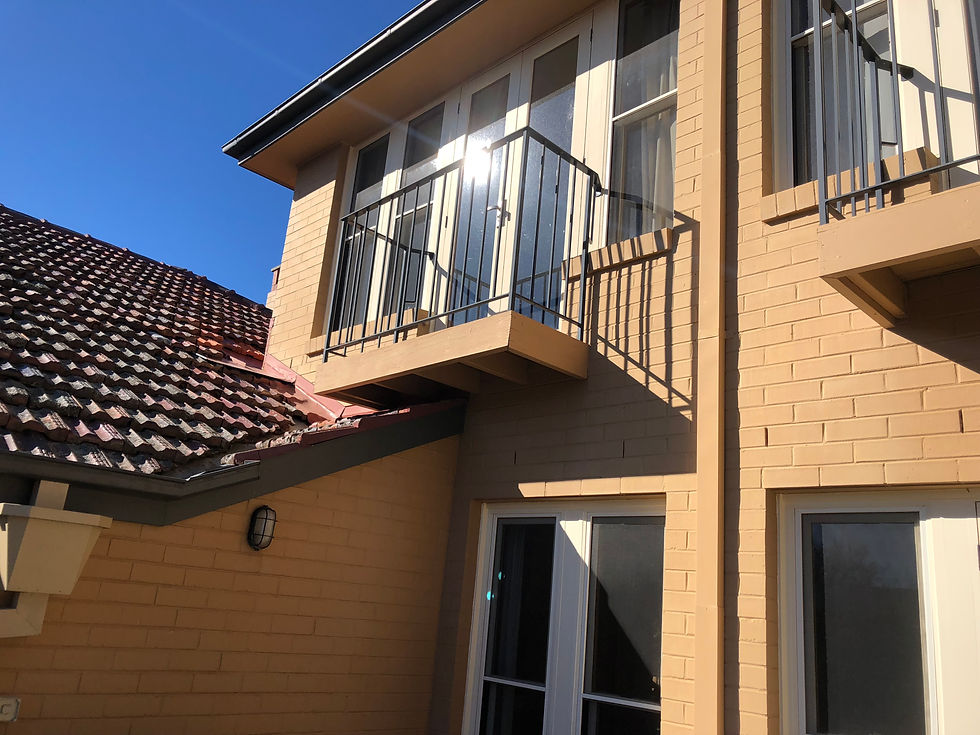
Before the warmer months bring their own stress (heat, UV, expansion), take ten minutes to walk your property and check:
Eaves and window frames — look for any lifting, flaking or soft-feeling paint left behind by winter frost and rain.
Shaded and south-facing walls — check for green or black staining, and any cracks that have widened over winter.
Gutters and downpipes — confirm they drained properly all winter and haven't left damp patches or staining on nearby walls.
Render joins and corners — look for cracks that may have opened up further during the cold snaps.
Why Spring Is the Right Time to Act
Spring in Canberra brings milder, more stable temperatures and lower humidity — ideal conditions for proper paint adhesion and curing, without the extremes of summer heat or winter frost working against the job. Repairing winter damage now, before the summer sun and UV get to work on any exposed or cracked areas, means the fix lasts longer and costs less than waiting for a bigger repair down the track.
Spotted flaking, cracking or staining after winter? Don't wait for the summer heat to make it worse. Get in touch with Glen and the team at Prowse's Painting for a free, no-obligation on-site assessment, tailored to your home and Canberra's conditions.
